
Saturday, 31 October 2015

Blogger health check 1


I am doing well with my blog posts, the quality and content being good. However, I need to ensure:
- I post everything on time
- I don't 'binge' post and make lots of posts - I need to spread them out
Blogging Health Check

Good luck reading that writing
As of 22/10/2015, I've completed all blog posts up to Number 22, in addition to some bonus ones. Judging by the concentration of ticks on the piece of paper, I would suggest that I am doing pretty well.
The bonus World War Z blog post also seems to have gone down well, as has the post on "The Importance Of Sound" for its detail.
I'm trying to read some of the points on the paper, such as: Detailed, Nicely Presented, Personal Voice, and Up to Date.
However, there is a Reliance on Screenshots.
Friday, 23 October 2015
Idea and influences for range of shots, shot types and camera movements

Range of shots or shot types
Birdman:
- Camera pans to cut between shots
- The camera will cut away from the action to an extra that has nothing to do with whats going on to give enough time for a cut during the pan.
- Masking a wipe with something natural in the environment that crosses the entire frame of the film
- Moving the camera between the areas of focus and adding cuts in between
PLANNING - Ideas and Influences: Camera Movement & Storytelling
SNOWPIERCER
Whenever a character has to make a decision, they look left of frame or right of frame, and this is used to deliver the symbolism of the central film. The idea of pushing forward (to the right of the frame) can overpower the need to look back and see what anchors your ethics (the left of frame).

THE PERKS OF BEING A WALLFLOWER
Charlie's breakdown scene is the climax of the film. The frame shows Charlie walking in three different locations in the frame, showing the loss of control and ability to hold onto reality. The flashbacks appear on screen for a shorter and shorter amount of time as the breakdown unfolds, pushing that idea further.

ALIEN
Ripley in the hallway is a long take, uninterrupted by unnecessary cuts. Heightens the tension of the scene.

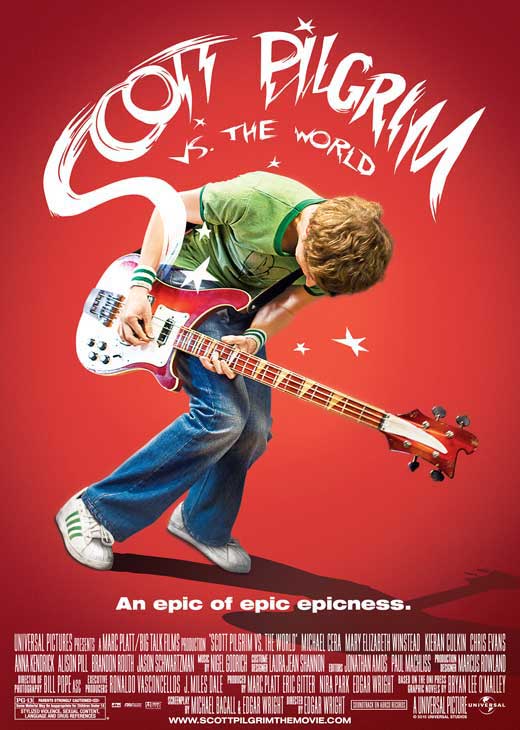
SCOTT PILGRIM VS. THE WORLD
The party scene of the film, once Scott first becomes obsessed with Ramona Flowers. The camera movement and transitions visually represent his state-of-mind, being completely lost with his head in the clouds.
Whenever a character has to make a decision, they look left of frame or right of frame, and this is used to deliver the symbolism of the central film. The idea of pushing forward (to the right of the frame) can overpower the need to look back and see what anchors your ethics (the left of frame).
THE PERKS OF BEING A WALLFLOWER
Charlie's breakdown scene is the climax of the film. The frame shows Charlie walking in three different locations in the frame, showing the loss of control and ability to hold onto reality. The flashbacks appear on screen for a shorter and shorter amount of time as the breakdown unfolds, pushing that idea further.
ALIEN
Ripley in the hallway is a long take, uninterrupted by unnecessary cuts. Heightens the tension of the scene.
SCOTT PILGRIM VS. THE WORLD
The party scene of the film, once Scott first becomes obsessed with Ramona Flowers. The camera movement and transitions visually represent his state-of-mind, being completely lost with his head in the clouds.
Ideas and Influences
Use Of Sound: World War Z: Loud, High-Pitched, Repetitive Score (Music) - Music slowly builds up in speed pitch and volume - Commentary of a news report - Isolated, asynchronous sound effects - Voices/Traffic build up in concentration to portray chaos: Gone Girl: Quiet music of an organ - Use of narrator to establish the plot
Colours and Colour Palettes: World War Z: Dark, unsaturated - Half Screen of black for titles - Filters over certain moving images - Colours used to present chaos Gone Girl: Dark and Miserable
Mise-en-Scene: Memento: Very few props - Isolated setting
Storytelling Ideas and Plot Devices: World War Z: News Report Memento: Plot in reverse
Introducing Characters: Memento: Killer and Victim established (all rest left unknown)
Range of Shots or Shot Types: Rush Hour 3: Establishing shots of the city get closer and closer World War Z: The time each shot is on the screen for becomes less and less as the title sequence goes on
Camera Movement: The Taking of Pelham 123: Lots of movement of the camera to convey chaos or rush
PLANNING: Head on - Ideas and influences for introducing characters
Ideas and influences for introducing characters
Black swan
Shows the hobbies of the main character - art & ballet. More abstract and interesting
Mulan
explores the characters culture. This is quite unusual, and tells us more about the character
Legally blonde
Uses lots of mise-en-scene
Introduces friends and the society she lives in - these shape the character
Her femininity is introduced through her jewellery and makeup etc
Heathers
The 'heathers' are introduced as mean and wealthy- they step in the flowers and have statues on the lawn.

Thursday, 22 October 2015

RESEARCH: Genre conventions in Thrillers
Conclusions:
Thrillers tend to use stylised title sequences on either moving images or it is common to use aspects of animation.
An obvious storyline or plot is not shown, so the audience is engaged and curious as to what is going to happen.
Intense erratic music and sound is common in a thriller, also engaging the audience and creating a suspenseful atmosphere.
Editing can also be quit erratic, adding to the rough tension created
There seems to be no common theme in typical camera angles, each one effectively creating the right atmosphere when working in combination with the other factors
Tuesday, 20 October 2015
Sunday, 18 October 2015
Saturday, 17 October 2015
Friday, 16 October 2015
Thursday, 15 October 2015

RESEARCH: Target Audience - Task 2
Task 2
We created our questionnaire and conducted interviews together as a group
Part A - Questionnaire
A link to our questionnaire can be found here
By sharing it on Facebook, 57 people ranging in ages answered it:


These are only a few sample answers to the following, not being able to post all 57 responses to these questions


Part B - Interviews
We conducted four interviews of people of all different ages and gender about their favourite genre
RESEARCH: Target Audience - Task 1
Task 1
An audience is the people who use or watch your product. A target audience is a particular group of people or an age that a product, in this case a film, is aimed at. Your target audience could be based towards age, gender, location, common interests etc, but the product is not solely for them, it is just based towards them; anyone may enjoy it. It is useful for a film to have a target audience because that helps them to assess what content they should include in their film, and also how to market it e.g. through adverts in a newspaper or on television.
I think some genres are definitely marketed to different audiences, despite anyone being able to like them, for example romances are usually marketed towards women, whilst action films are marketed towards men in their 20s.
RESEARCH: Analysis of 3 Title sequences
Our chosen genre is thriller, because it makes for exciting and engaging films. I have chosen to analyse the title sequences of:
Macro elements:
- Gone girl
- Black swan
- Momento
Gone girl
Macro elements:
- Storyline: Something's not right
- Key themes: The slow, unfolding nature of the events - elements of the thriller theme
- Plot: Something eerie, or spooky is going to happen
- Characters: The narrators wife, and then the narrator
- Social groups: 30ish white middle class americans (presumably heterosexual - they are married) living in the suburbs
Micro elements:
- Typical uses of camera: Woman looking into camera - breaks the forth wall, Panning shot shows the scenery but so do the close up still shots of houses etc
- Editing: The blackouts between the shots and credits helps to add to the thriller genre by creating a creepy and suspenseful element
- Sound: Quiet, ominous music. Voice over directly addresses the audience with narration
- Mise-en-scene: Shot of woman appears to be from the perspective of the narrator, which creates a relationship between the viewer and the character. Having the title of film in white text on the background creates a minimalistic appearance. The dusk lighting also adds to the uneasy feeling created.
Black swan
Macro elements:
- Storyline: Nothing clear about the storyline is revealed in this opening sequence, but the captions do reveal the names of the main actors and actresses, which tells us that that film has a female lead/is female orientated
- Key themes: The classical music suggest a ballet element, as does the title. The chalk reveals an artistic element, although the increase in the erratic nature of the music and chalk drawing suggest the increase in erratic nature of the main character/of the events
- Plot: No particular details regarding plot are revealed
- Characters: A woman, who's hand is seen whilst drawing, but nothing else
- Social groups: A white woman (the hand) but nothing else is revealed, not even age although we could hazard a guess of 20s from the appearance of the hand, but nothing definite.
Micro elements:
- Typical uses of camera: The camera just follows the shot of the woman drawing, cutting to different angles. This engages the audience as they become curious as to what she is drawing
- Editing: The clean cuts between shots help with the flow of the sequence, which again helps to emphasise the ballet theme
- Sound: Classical music from the ballet Swan Lake - ballet theme. However it is slightly ominous which links to the thriller genre
- Mise-en-scene: The black chalk seen represents the Black swan, whilst the soft lighting shows the femininity of ballet.
Momento
Macro elements:
- Storyline: Something to do with a murder, set in the late 90s/early 00s - the camera used and glasses suggest that
- Key themes: Violence, death
- Plot: A murderer who takes pictures of his victims
- Characters: The main character, a male murderer
- Social groups: White young American men
Micro elements:
- Typical uses of camera: The video is shown in reverse. There are lots of close ups
- Editing: Lots of very long shots, and also tracking shots
- Sound: Slow, creepy music creates suspense. Sounds made by the props are very loud e.g. the camera or the glasses
- Mise-en-scene: The glasses and bullet are isolated on the floor, giving emphasis to them. The blood stained walls help to create an ominous effect
Tuesday, 13 October 2015
Target Audience (RESEARCH) - Part 1
Part 1

The people who consume (use or watch) your product is your audience. The specific group of people (demographic) that a filmmaker aims their product act is a target audience. These groups could be separated by factors such as age, gender, class etc. - however, don't get it twisted; this is only the typical expected audience, and definitely not everyone who may enjoy it. Most products design an audience early on so they can outline their method of producing and marketing it, such as through adverts in a magazine, or alternatively, online, for example.
It's clear that certain genres are marketed towards a specific target audience, such as romance films often being aimed at women, and 'chick-flicks' usually at teenage girls.


The people who consume (use or watch) your product is your audience. The specific group of people (demographic) that a filmmaker aims their product act is a target audience. These groups could be separated by factors such as age, gender, class etc. - however, don't get it twisted; this is only the typical expected audience, and definitely not everyone who may enjoy it. Most products design an audience early on so they can outline their method of producing and marketing it, such as through adverts in a magazine, or alternatively, online, for example.
It's clear that certain genres are marketed towards a specific target audience, such as romance films often being aimed at women, and 'chick-flicks' usually at teenage girls.

Analysis of 3 Title Sequences of Potential Genres - Macro, Micro, Order (RESEARCH)
For our title sequence, we are pretty confident that we will do a Thriller Film - embedded is a presentation of two title sequences of this genre and Macro, Micro, and Credit Order analysis.

Monday, 12 October 2015
What titles are used in title sequences? (RESEARCH - No. 7)
Using the 2 Titles Sequences from artofthetitle.com, previously analysed, I can get a vague sense of how conventional titles look:
The Order

The Order
- Ident
- Director presents
- Writers film
- Title of film
- Starring actor
- Other key actors
- Casting by
- Music
- Edited
- Production Design
- Director of photography
- Executive producers
- Produced by
- Directed by
Length of Credits
In back to the future, none of the credits were any longer on screen than 5 seconds in the title sequence.

Font Style
Usually in capital letters (names) but thin and not too out there
Font Size
Often large, but not the main focus of the screen, and generally names are bigger than phrases such as 'Presents'.
Saturday, 10 October 2015
RESEARCH: Genre and Audience - BFI Report
Genre
In 2013 the three most successful genres in the UK box office were Animation, Action and Comedy, whilst the least successful three (in order of highest to lowest) were Romance, Documentary and War. With 153 films in 2013-14, the comedy genre has released the most, whilst animation only sits at 33, and action at 47. This tells us that the film production of action films, for example must be expensive - they use lots of special effects, including expensive props and make up. It further implies that animation is also expensive to make, but is more time consuming than others, especially if drawing every frame (although that is rarer now-a-days). Moreover, it tells us that the highest ranking films are the most appealing to audiences as they have the highest grossing box office; more people went to see them in cinema than films of other genres.
Audience
The largest proportion of cinema admissions in the UK was made by young adults aged 15-24 who created 33% of all UK cinema goers. Within this age range the most popular comedy film was Hangover part 2, whilst the over 50's on the other end of the spectrum enjoyed the drama/comedy film Quartet. However the most popular genre overall for the 50+ audience was independent UK films, with 45% preferring them.
The older children/younger teenagers 3 most popular films were Wreck-It Ralph, Despicable me 2 and Monsters University, all family animated films. The older audience of 35-44 year olds also seemed to enjoy animated/family films the most; they were likely the parents of younger children whom the film was aimed at. The age group below this - the 25-34 year olds - appear to enjoy action films most, their top 3 being Django Unchained, Fast and Furious 6 and Rush.
Men seemed to enjoy Action, Comedy and Thriller films the most, whilst there was no particular or defining category for women, who seemed to watch a wider range of genres.
The middle class audience enjoyed a range of film and genre, from action films like Rush to animated children comedies like Despicable me 2.
In London, cinema goers favoured the fast-paced action films of Django unchained and Fast and furious whilst up in Scotland UK made films were popular, like Sunshine on Leith and Filth; they did also enjoy American blockbusters however like Star Trek into Darkness.
My own findings
Whilst researching the BFI report I noticed some interesting things. To begin with, Disabled people are dramatically under represented throughout nearly all film platforms (excluding physical sell through). Most notably they only make up 11.3% of all cinema goers in the UK. This perhaps sheds light on the accessibility of the film industry and maybe even discrimination against those with disabilities whether intentional or not.
Another thing I noticed was that the last film in the Harry Potter franchise, Harry Potter and the Deathly Hallows, made £11.1 million less than the first film, Harry Potter and the Philosopher's stone, despite having a much much larger fan base.
In 2013 the three most successful genres in the UK box office were Animation, Action and Comedy, whilst the least successful three (in order of highest to lowest) were Romance, Documentary and War. With 153 films in 2013-14, the comedy genre has released the most, whilst animation only sits at 33, and action at 47. This tells us that the film production of action films, for example must be expensive - they use lots of special effects, including expensive props and make up. It further implies that animation is also expensive to make, but is more time consuming than others, especially if drawing every frame (although that is rarer now-a-days). Moreover, it tells us that the highest ranking films are the most appealing to audiences as they have the highest grossing box office; more people went to see them in cinema than films of other genres.
Audience
The largest proportion of cinema admissions in the UK was made by young adults aged 15-24 who created 33% of all UK cinema goers. Within this age range the most popular comedy film was Hangover part 2, whilst the over 50's on the other end of the spectrum enjoyed the drama/comedy film Quartet. However the most popular genre overall for the 50+ audience was independent UK films, with 45% preferring them.
The older children/younger teenagers 3 most popular films were Wreck-It Ralph, Despicable me 2 and Monsters University, all family animated films. The older audience of 35-44 year olds also seemed to enjoy animated/family films the most; they were likely the parents of younger children whom the film was aimed at. The age group below this - the 25-34 year olds - appear to enjoy action films most, their top 3 being Django Unchained, Fast and Furious 6 and Rush.
Men seemed to enjoy Action, Comedy and Thriller films the most, whilst there was no particular or defining category for women, who seemed to watch a wider range of genres.
The middle class audience enjoyed a range of film and genre, from action films like Rush to animated children comedies like Despicable me 2.
In London, cinema goers favoured the fast-paced action films of Django unchained and Fast and furious whilst up in Scotland UK made films were popular, like Sunshine on Leith and Filth; they did also enjoy American blockbusters however like Star Trek into Darkness.
My own findings
Whilst researching the BFI report I noticed some interesting things. To begin with, Disabled people are dramatically under represented throughout nearly all film platforms (excluding physical sell through). Most notably they only make up 11.3% of all cinema goers in the UK. This perhaps sheds light on the accessibility of the film industry and maybe even discrimination against those with disabilities whether intentional or not.
Another thing I noticed was that the last film in the Harry Potter franchise, Harry Potter and the Deathly Hallows, made £11.1 million less than the first film, Harry Potter and the Philosopher's stone, despite having a much much larger fan base.
How can a film opening attract an audience? - Documentary "Watching"
1) What does Thomas Sutcliffe mean when
he says “Films need to seduce their
audience into long term commitment.
While there are many types of seduction, the temptation to go for
instant arousal is almost irresistible”
If the opening of the film starts with a shock it will leave the audience wanting more, sometimes film makers will have a gradual build up to the main action sequence but other times some films have the action right at the start to pluck the attention of of the audience so they are wanting more of the film from the beginning.
2) According to Director Jean Jacques
Beineix, what are the risks of ‘instant
arousal’?
He means by instantly giving the audience the best part you have to keep that same level stimulation throughout the rest of the movie. So giving someone that same level of excitement during the remainder of the film will be difficult due to the fact that the audience will expect the same level of 'arousal' during the rest of the film.
3) Explain why “a good beginning must make the audience feel that it doesn't know
nearly enough yet, and at the same time make sure that it doesn't know too
little”
A good beginning lets the audience have a slight idea of what the movie is about which gives them a taste of interest while still allowing room for questions that need to be answered.
4) What does critic Stanley Kauffmann describe
as the classic opening? Why does this
work?
He talks about an opening of when they present the audience with an establishing shot of the setting, the camera should be moving slowly showing the audience what we should be focusing on. This lets the audience have a simple idea of what the film is going to be about while also letting them look at the setting of the scene to also further their understanding of what is going on.
5) Why is Kyle Cooper’s title sequence to
the film Seven so effective?
The reason the style Kyle Coopers uses is so effective is that it captures the audiences attention, In a way it tells you a tale which in itself feature traits that either the main character have or what we are focusing on.
6) What did Orson Welles want to achieve
with his opening to the film A Touch of Evil?
What did Universal Studios do to it? Why?
He wanted to create uncertainty and interest within the audience by not using credits or music in the opening, Universal who didn't get what we was trying to go for put credit and music at the opening. Due to this the effect Orson Welles was trying to achieve was lost.
7) What is meant by “a favourite trick of Film Noir”? What is
the trick?
This is when the opening scene is also the ending, which foreshadows what happens. This makes it very hard to keep the curiosity of the audience due to them already knowing the outcome of the movie.
Friday, 9 October 2015
Importance of Sound in Film (RESEARCH)
In a film, sound is used to establish tone/ atmosphere and give clues about the genre - it also helps to suspend disbelief. To understand to importance of sound, we must first have a grasp of the following terms:
Sound and Genre
Sound actually helps us easily identify the genre of the movie, without even needing images. Some of these sections of music here help to demonstrate that:
This one is clearly a western, due to the country music, horse tapping sounds, and gunshots.
This sound makes it obvious we're dealing with a Sci-Fi movie, due to the noise that can only be described as 'Spacey'
Clip 3 is obviously an action movie, due to the exciting music and sound effects of cars speeding past.
This final clip is clearly a 'Chick Flick' due to the girly, light hearted music - it's actually from the film Legally Blonde, which I haven't seem, obviously.
Creating Soundscapes - Terminology
Although you may be of the opinion that sound is pretty simple, but to be able to create a soundscape for a film, knowledge of the terminology is needed.
- Sound - Vibrations that travel through certain mediums and can be heard when reaching the ear
- Soundscape - A piece of music considered by its component sounds
- Sound Design - Manipulating or generating audio elements
- Suspending Disbelief - The process of getting someone to believe the unbelievable
The importance of sound is explicit when you watch an opening sequence without the music and sound effects that support it - such as 'The Taking of Pelham 123".
Without sound, the title sequence feels a lot longer than it actually is - it's boring and for the audience, even feels awkward. However, if you take it off mute, it's interesting, entertaining, and feels a lot faster in terms of pace.This shows that sound makes films more enjoyable and engaging the audience; it's a lot easier to get into the feel on the movie.
Sound and Genre
Sound actually helps us easily identify the genre of the movie, without even needing images. Some of these sections of music here help to demonstrate that:
This one is clearly a western, due to the country music, horse tapping sounds, and gunshots.
This sound makes it obvious we're dealing with a Sci-Fi movie, due to the noise that can only be described as 'Spacey'
Clip 3 is obviously an action movie, due to the exciting music and sound effects of cars speeding past.
This final clip is clearly a 'Chick Flick' due to the girly, light hearted music - it's actually from the film Legally Blonde, which I haven't seem, obviously.
Creating Soundscapes - Terminology
Although you may be of the opinion that sound is pretty simple, but to be able to create a soundscape for a film, knowledge of the terminology is needed.
- Wild Track - An audio recording intended to be synchronised with film or video but recorded separately
- Ambient Sound - The background sounds which are present in a scene or location
- Diegetic Sound - Sound whose source is visible on the screen or whose source is implied to be present by the action of the film: voices of characters. sounds made by objects in the story
- Non-Diegetic sound - Sound whose source is neither visible on the screen nor has been implied to be present in the action: Narrator's commentary, Sound effects which is added for the dramatic effect, Mood music
- Score - Orchestrate or arrange (a piece of music), typically for a specified instrument or instruments
- Song - A short poem or other set of words set to music or meant to be sung
- Voiceover - A piece of narration in a film or broadcast, not accompanied by an image of the speaker
- Dialogue - A conversation between two or more people as a feature of a book, play, or film
- Dubbing - To alter the soundtrack of (an old recording, film, etc) (transitive) to substitute for the soundtrack of (a film) a new soundtrack, especially in a different language
- Foley - Relating to or concerned with the addition of recorded sound effects after the shooting of a film
- Synchronous -Synchronous sound includes all noises whose origins can be seen on-screen: in a "two-shot" conversation between two lovers you simultaneously see their lips flapping and hear the words they speak
- Asynchronous - Asynchronous sounds match the action being performed however is not precisely synchronised with the action. Here is an example of asynchronous sound. The sound being heard is of a train however what can be seen is a women screaming
- Sound Bridge - transitions in the continuity editing style, one that stresses the connection between both scenes since their mood (suggested by the music) is still the same
- Sound Motif - A sound effect or combination of sound effects that are associated with a particular character, setting, situation or idea through the film: The sound motifs condition the audience emotionally for the intervention, arrival, or actions of a particular character
RESEARCH - Audience Profiles
Using YouGov's audience profiler, I researched the core information about the target audience of three movies: Fast & Furious, Scott Pilgrim vs. The World, and Mad Max: Fury Road.
Fast & Furious
According to the website, fans of the Fast & Furious franchise are likely to be male in their mid-twenties to late thirties. They tend to be in the social grade of C2DE, which would make the demographic a range from manual to low-skilled labour workers. The audience also tends to be more politically right wing.

The fanbase also tends to describe themselves as easy-going and hardworking, if sometimes arrogant. They're also generally interested in technology & sport, thus tend to consume tech-brands, as well as cable providers.

Unsurprisingly, fans of the franchise like similar action blockbusters, as well as other films in the franchise.
Scott Pilgrim vs. The World
While also predominantly male, the demographic for Scott Pilgrim vs. The World has some key differences when compared to the fanbase of Fast & Furious. They're younger, with an age range of 18-24, and tend to lean towards the left wing. They are also of the C2DE social grade.

 When looking at other entertainment, they like comedies that are relatively similar in style (one example being Kick Ass), as well as other Edgar Wright comedies (Hot Fuzz, Shaun of the Dead, The World's End).
Mad Max: Fury Road
Another predominantly male-appealing movie, with the age range of 25-39. Again, the viewers of this film tend to be of the C2DE social grade, but like Scott Pilgrim vs. The World, are politically left-wing.

The Mad Max: Fury Road fanbase are generally gamers, TV and movie lovers, and science & tech enthusiasts. They are Internet regulars and see themselves as independent and alternative. Sometimes, they acknowledge that they can be dull and apathetic (all of these are self-assessments). They like to use food delivery services like Just Eat, and enjoy their tech brands, like technology provided by Google.

Their entertainment tastes are relatively alternative when it comes to music, with niche artists such as Beck, but are completely in the blockbuster mainstream when it comes to films and television, with some favourites being Avengers: Assemble and Captain America: The Winter Soldier.

Unsurprisingly, fans of the franchise like similar action blockbusters, as well as other films in the franchise.
Scott Pilgrim vs. The World
While also predominantly male, the demographic for Scott Pilgrim vs. The World has some key differences when compared to the fanbase of Fast & Furious. They're younger, with an age range of 18-24, and tend to lean towards the left wing. They are also of the C2DE social grade.

The average fan is also enjoys arts and culture in general, as well as gaming and science. They tend to be knowledgable, challenging, and quiet, if somewhat unsociable and grumpy. This would make sense, as they tend to consume a lot of stay-at-home brands, like Netflix and Google Play. These are relatively tech savvy and nerdy brands, which does fit with the tone of the film.

Mad Max: Fury Road
Another predominantly male-appealing movie, with the age range of 25-39. Again, the viewers of this film tend to be of the C2DE social grade, but like Scott Pilgrim vs. The World, are politically left-wing.

The Mad Max: Fury Road fanbase are generally gamers, TV and movie lovers, and science & tech enthusiasts. They are Internet regulars and see themselves as independent and alternative. Sometimes, they acknowledge that they can be dull and apathetic (all of these are self-assessments). They like to use food delivery services like Just Eat, and enjoy their tech brands, like technology provided by Google.

Their entertainment tastes are relatively alternative when it comes to music, with niche artists such as Beck, but are completely in the blockbuster mainstream when it comes to films and television, with some favourites being Avengers: Assemble and Captain America: The Winter Soldier.
Films and Audience - YouGov Profiles (RESEARCH)
Rush Hour

 They're male, young, and apparently, pretty right wing and not working class - interesting.
Unsurprisingly, they're interested in Rush Hour 2, and other great action films; they also seem to have a particular interest in Will Smith.


Obviously, these are based on a limited pool of people, and in my opinion, aren't an accurate representation of the audience of these films, so that's why you may disagree with certain 'facts'.
According to the profile from YouGov, the regular audience for the greatest comedy of the last 20 years, Rush Hour, is as follows:


Unsurprisingly, they're interested in Rush Hour 2, and other great action films; they also seem to have a particular interest in Will Smith.

In terms of other products they may consume, they like expensive, but not luxury brands; Vans, Cat Inc., George, and BMW. They shop at Tesco and Marks and Spencer, according to this, and are fans of American Football. They also read Cosmopolitan and spend an average amount of hours online a week.


Fast and Furious 7
Famous action blockbuster, Fast and Furious 7, has a typical audience in the eyes of YouGov; Male, in their 20's and 30's, working class, yet right wing.


In relation to brands, this audience enjoys brands such as Superdry or JD Sports, and drives an Audi, showing they may have a sporty side. Apparently, they also shop at ASDA.


In terms of other media, they spend much more time than average watching TV and Online, usually watching shows such as Top Gear, Criminal Minds, Storage Hunters, and The Flash. Interestingly, they read The Sun.


Obviously, these are based on a limited pool of people, and in my opinion, aren't an accurate representation of the audience of these films, so that's why you may disagree with certain 'facts'.
Subscribe to:
Comments (Atom)